WRITTEN BY DAVID PODUT
Technology redefines art in a strange, new and simultaneously captivating way. Artistic
movements such as the Dada movement (born during World War II and predicted to revive
due to events in 2020) and Postmodern (A new movement that emerged in the early 21st
century that grew in popularity after the 60s).
Assemblance by Umbrellium – Powered by Pangolin and KVANT
‘‘ Assembelence ’’. The exhibition presents the possibility to walk through colored lasers and
smoke in order to create original structures, and many are inclined to work alone but this
produces fragile and unspectacular structures. The exhibition explores collaboration with
others with whom making simple actions such as holding hands produces more
sophisticated and resilient laser structures. One of the founders, Usman Haque, mentioned
that he associates the structures with a sand castle in which an aggressive and impatient
nature will only end up tearing it down.
Petting Zoo by Minimaforms – Frac Centre
One of my favorite exhibitions is an interpretation of animal farms where you can go pet the
animals. The concept was taken over and adapted in one of the most captivating exhibitions
I’ve seen, called “Petting Zoo”, which can be found at “Digital revolution”. The exhibition
shows groups of tubes similar to snakes hanging from the ceiling. The tubes react as they
read your movements and sounds. The tubes change color and move away or closer as if
they were conscious and curious animals. When a larger group approaches them, they shy
away and if you caress them, they will show signs of affection. The exhibition created by
Minimaform aims to glimpse the future where artificial intelligence and robotic pets will have
the opportunity to read our emotions and state of mind.
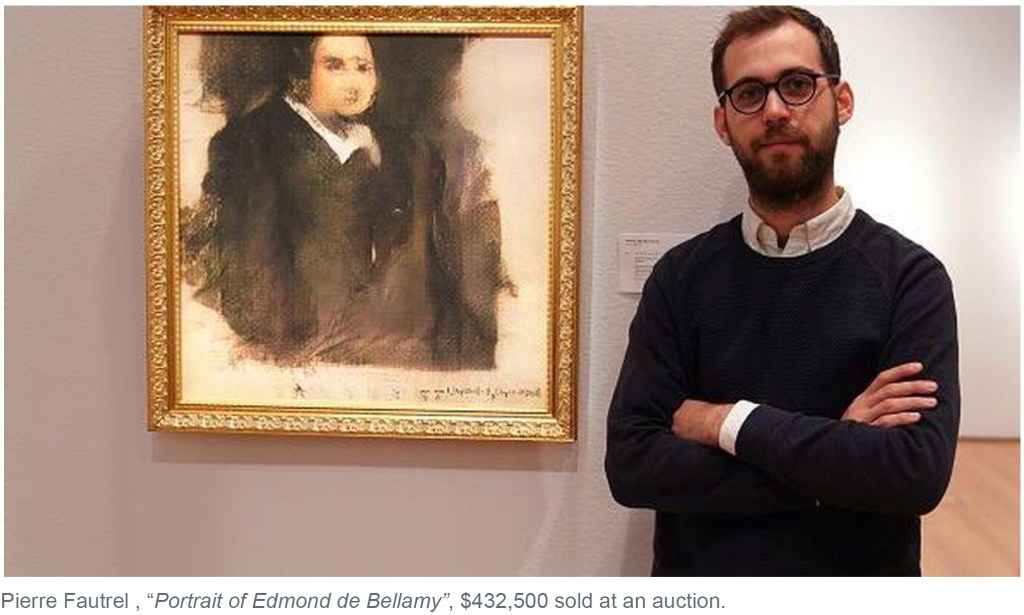
Can artificial intelligence create art? The results are unimaginable. Although the style cannot
have a name at the moment. There are faceless portraits made by GAN (Generative
Adversarial Network). Similar to other learning machines, GAN learned in this case by
analyzing common patterns, using them to create their own art. A painting from the
Renaissance period may contain a person occupying one-fifth of the image and although the
computer does not know what a person is, seeing enough of the same types of patterns in
different images will make it understands the concept and stores in order to use it in the
future.
Refik Anadol studio another incredible scene that leaves your mouth wide open. His
electronic work is composed of pieces of data that he puts through a neural network in order
to show us his vision of the future. “I always tried to speculate on the idea, if computer data
can become pigment”, Anadol tries to find the algorithm that narrates the data, “I try to make
the invisible, visible.”
His art presents another concept explored in 2020/2021 in which the tools are artificial
intelligence. In 2021 it is no longer enough to just create something digital with a computer.
With the help of artificial intelligence you can open paths unthinkable by the human mind and
create pieces of art that depict exactly what you envisioned .

I like to think that we will be able to discover new and unique things every day. And I believe
that through art we manage to keep the chain of new creations going. The future of
postmodernism consists of artificial intelligence and digital art as a basic medium. At the
moment, NFTs (Non refundable tokens) are growing in popularity and present an opportunity
for the art world to get mixed with crypto currencies. The future of art is based on things
beyond what we can achieve with our own hands and mind and maybe one day we will have
made a machine smarter than us.
 hARTS magazine