
By Maya Cacenco
In the US, supreme courts are the highest court in a state judiciary of a US State. The state courts have the final word on matters of state law, and usually hear appeals on legal issues that come from the lower courts. According to the American Bar Association, 95 percent of all cases are filed in state courts, giving the courts the immense power over people’s lives to strike down or move forward legislation on issues such as public school funding and the death penalty. State high courts have thus left a significant impact on society, being the deciding hand behind the preservation of reproductive rights, the limitation of partisan gerrymandering and the allowance of the death penalty.
Ever since the founding of the judicial branch, the goal was to have an independent judiciary, so that no external influences can impact the fairness of the court. In order to maintain judicial independence, judges should not have a personal interest in the decision making process and judges should be free of influence from other parties and other branches of government. Although there are constitutional provisions in regards to maining the independence of a judiciary, it is not guaranteed. In the last few years, due to campaign funding law, the selection of judges has become a brutal multi million dollar political election process, stimulating high profile allegations of judicial misconduct and bias. As documented in a recent report by the Brennan Center for Justice and National Institute on Money in State Politics, one third of sitting justices on elected courts have run on multi-million dollar campaigns, while the 2015-2016 election has record high numbers of big money supreme court races (Bannon, 2018).
The Supreme Court’s 2010 Citizens United decision was a turning point for election funding, catalyzing the big business to turn towards making donations to outside groups rather than directly to a candidate or political party. The Supreme Court thus raised the controversial legal questions of whether “inanimate entities,” such as political action committees or other third party groups, should have First Amendment protections (Leach, 2013). Following the landmark case, both federal and state campaign expenditures skyrocketed, the latter amassing roughly 500 million dollars in independent spending in the 2017-2018 elections (Evers-Hillstrom). This rise in spending can be noticed by state. In Colorado, before the Citizens United Decision, independent spendings totaled around $400,000. Post the decision, the state’s elections in 2014 saw roughly $34.8 million dollars in independent spendings. In the 2018 Colorado election, the amount of expenditures skyrocketed to $136.9 million in independent spending. According to the previously mentioned Brennan center report, during the 2015 – 2016 election, SUPER PACS, which are groups not endorsed by a political party or candidate that engage in political elections through significant donations, funneled $27.8 million on state supreme court elections.
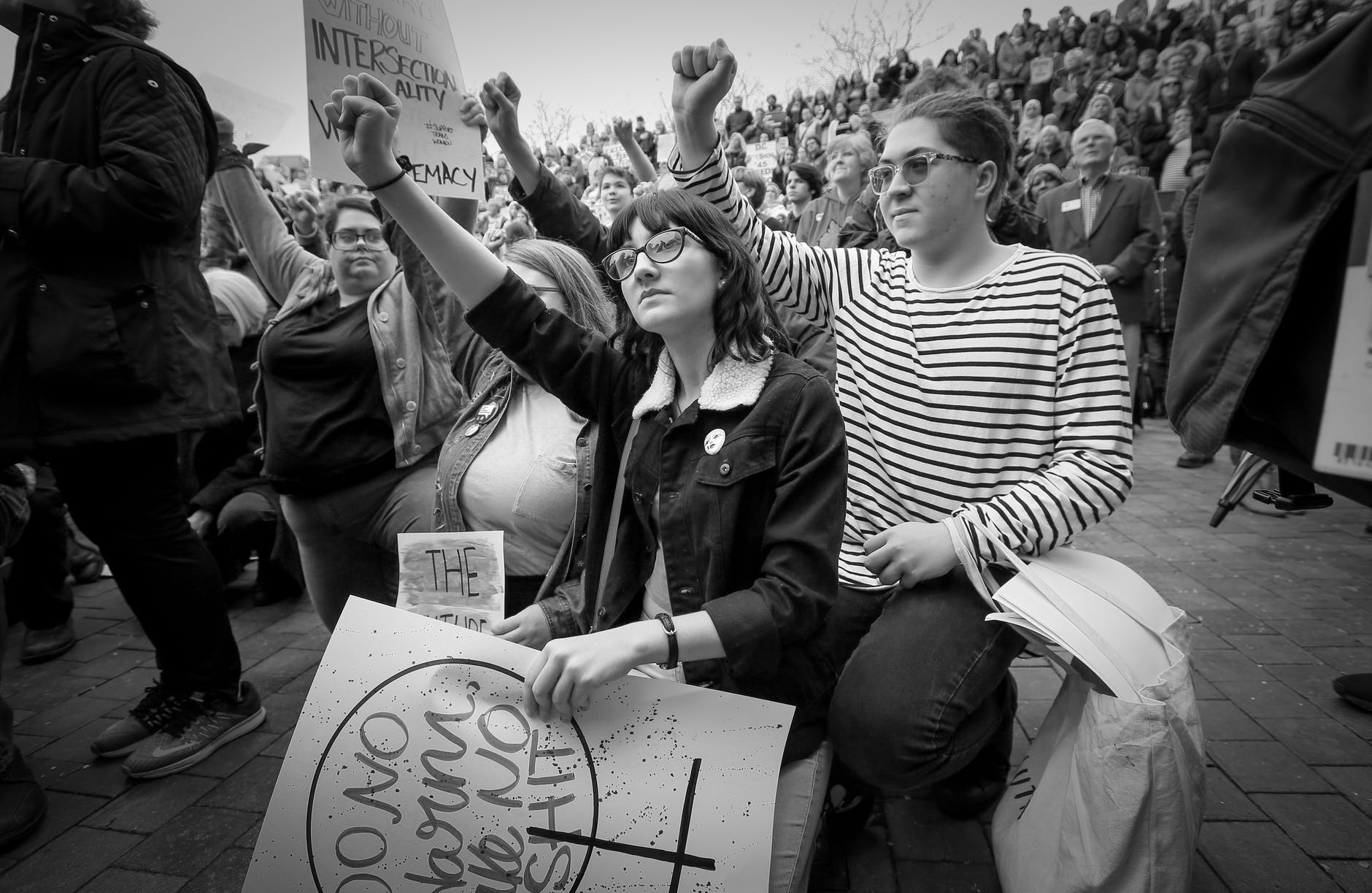
With all of these changes in the election process, money not only influences the ideological makeup of the court, but also puts direct pressures on the decision making process of the judges – all these factors pilling up to present a serious threat to American democracy.
Bibliography:
Bannon Alicia, Brennan Ctr. for Justice, Rethinking Judicial Selection in State Courts 6-7 (2016), available at https://www.brennancenter.org/sites/default/files/publications/Rethinking_Judicial_Selection_State_C
Leach, J. (2013). Citizens United: Robbing America of Its Democratic Idealism. Daedalus, 142(2), 95-101. Retrieved September 26, 2020, from http://www.jstor.org/stable/43297236
Evers-Hillstrom, K. (n.d.). More money, less transparency: A decade under Citizens United. Retrieved December 13, 2020, from https://www.opensecrets.org/news/reports/a-decade-under-citizens-united
 hARTS magazine