by ETHAN HARDER [our newest journalist]
Food is crucial in everything we do, from getting the nutrients we need, to trying to impress the person you like with a fancy dinner. Food plays a central role in our perceptions. It is no surprise, then, that countries use this to their advantage. This practice is known as gastro-diplomacy. This has been carried out for all of human history. Think about all the movies with politicians eating delicious-looking food prepared by the best chefs. However, it was in the 1940s when the science backed up what they were doing.
In 1940, psychologist Gregory Razvan described what has since become known as “the luncheon technique”. Basically, he presented sociopolitical statements such as, “Down with war and Fascism! Workers of the World Unite! America for Americans!” to 24 people (a mixture of students and unemployed workers), who had to rate them for personal approval, social effectiveness, and their literary value. The slogans were then divided into two groups, with one set being presented while the participants ate a free lunch, and the other set while they were subjected to many putrid smells. After five to eight sessions of such conditioning, the participants rated the statements once again. Those statements that had been associated with the free lunches obtained significantly higher ratings while those that had been associated with the putrid odors were given much lower ratings. This study led to further development of more techniques to sway people’s opinions.
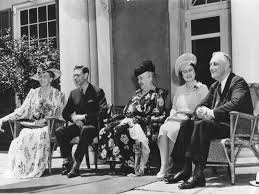
A sneaky way that countries have used food to influence people can be found in Britain. During WW2, propaganda was used everywhere on both sides. Both the Axis and Allies were piping out propaganda like nobody’s business to win the war. However, there was a sneakier way that the U.S. influenced the public. They influenced the perception of the U.S. public to see its Allies as down-to-earth people. They did this by inviting the English royalty to come to the White House. This was highly televised consciously, by manipulating the perception of the American public. The main takeaway from the televised meeting was the British royals eating hot dogs. Newspapers ran stories with titles like, “The royals eat hotdogs just like us” all over the United States.
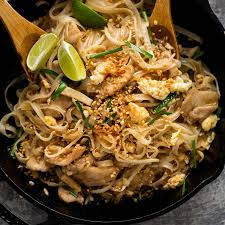
Examples of this can be seen everywhere, but one country that has seen the best results is Thailand. Thailand introduced gastro-diplomacy to the global stage in 2002 when it launched its “Global Thai” campaign. Their objective was to increase the number of Thai restaurants around the world and make dishes like Pad Thai and Pad See Eiu internationally recognizable. Additionally, the campaign sought to raise Thailand’s profile abroad, branding the country not just as a culinary destination, but also to cultivate economic opportunities and partnerships for Thai chefs, food products, and culture. In 2001, the Thai government established the Global Thai Restaurant Company, Ltd., in an attempt to establish at least 3,000 Thai restaurants worldwide. At that time, the government hoped the chain would be like “the McDonald’s of Thai food” and involved a decade-long plan to train and send chefs abroad. Unfortunately, “the McDonald’s of Thai food” never quite materialized, but the program itself significantly progressed the larger goal of an increase in the number of Thai restaurants abroad. The success of this decade’s extended plan has seen the rise in tourism. Bangkok has become a must-see city, and it has its food to thank.
Food is a powerful tool, and for years, countries have been using it to gain power and influence. Countries that had previously not been on the map have risen to popularity because of the push for their native cuisine. So, next time your significant other makes you a fancy meal, know there might be an ulterior motive.
 hARTS magazine