! SENSITIVE CONTENT ALERT !
an article by Laura Ionescu
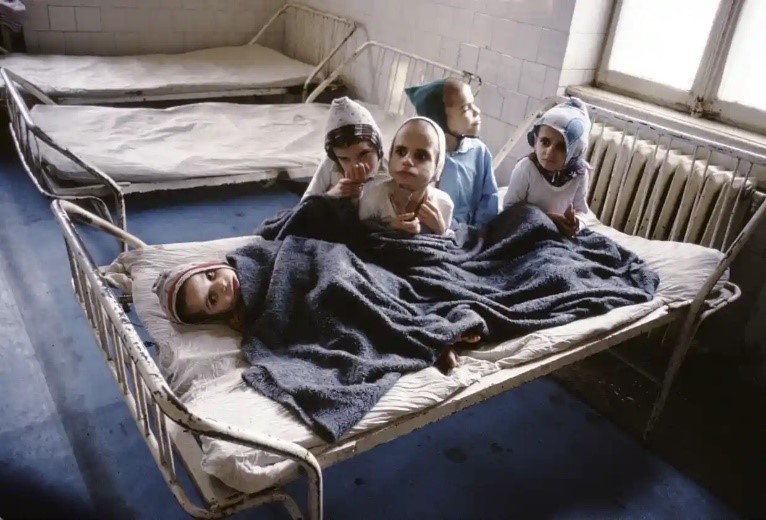
“A recent report suggests a growing number of Romanian children are being subjected to emotional, physical, and even sexual abuse in their own families.” This is how a 2002 RadioFreeEurope report commences its account of child abuse in Romania. More than 18 years later, Statista claims almost 11 thousand child neglect cases and just under 4000 emotional, physical and sexual abuse ones. 18 years and no improvement has been detected when it comes to children mistreatment.
UNICEF published a press release in April this year claiming that children might, in fact, be at increased risk of harm online during the global COVID-19 pandemic. In an attempt at helping government, ICT companies, educators and parents to protect children during lockdown, UNICEF Romania has released a statement meaning to raise awareness about the dangers of substantial screen time increase in under-18’s. Executive Director of the Global Partnership to End Violence, Dr. Howard Taylor stated: “School closures and strict containment measures mean more and more families are relying on technology and digital solutions to keep children learning, entertained and connected to the outside world.” The danger raises – as per Taylor – from the fact that “not all children have the necessary knowledge, skills and resources to keep themselves safe online.”
Shortly after Romania joined the European Union in January 2007, “Humaniun” published a report analyzing children’s rights in Romania and positioned Romania’s situation on the “Realization of Children’s Rights Index” at 8,54/10, claiming that this nation has a “satisfactory situation”. Despite this pink-colored, over-positive analysis, the report then proceeds to outline Romania’s “very poor” economic state, the fact that 1% of children are working in Romania and the 10,000 figure which summaries the number of unassisted pregnancies that occur yearly. The report claims that “in addition [to the figures states previously], girls are also victims of trafficking which often leads to prostitution. Abused by gangs, they often have little hope of escaping. They are subjected to psychological and physical trauma from which it is difficult to recover.”
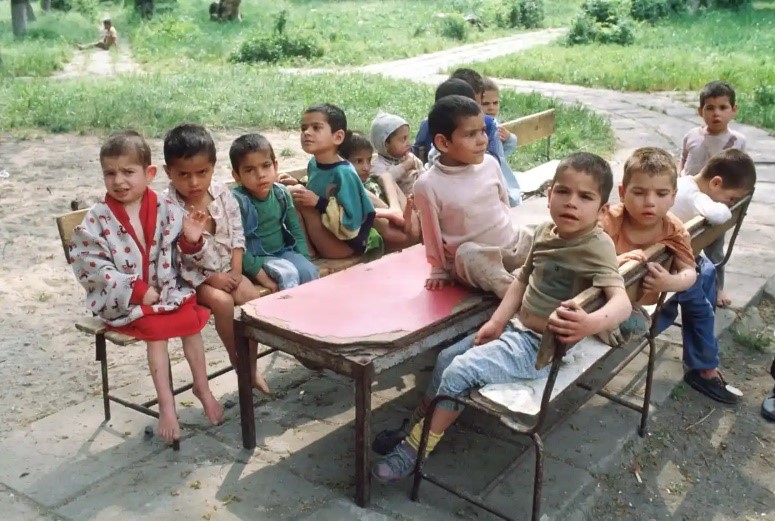
The reason why these figures are so striking in a country that now classifies as a “high-income economy” (according to the World Bank 2020 report), with an economy which transformed into one of relative macroeconomic stability after the 1989 economic instability and decline, are a lack of education, health and public services in rural areas. There are many major urban areas in Romania including Bucharest [capital], Cluj-Napoca, Timisoara, Iasi, Constanta, Craiova, Brasov and Galati. However more than 45.92 percent of Romania lives in rural areas, which are prone to sever poverty and lack of sanitation and educational and health facilities. These areas have the highest rates of child abuse which come as a result of a lowered “educational aspiration” of both children and adolescents. These stats lead to “the appearance of frustration and thus the reproduction of feelings of alterity and marginality”, which, in return, makes children even more prone and vulnerable to abuse.
Child abuse is a concern all throughout the world, not solely in Romania. The World Health Organization regional office for Europe claimed that “at least 55 million children experience some form of violence in the WHO European Region”. The highest statistic stand for emotional abuse (29.1%), closely followed by physical abuse (22.9%) and sexual abuse (9.6%).
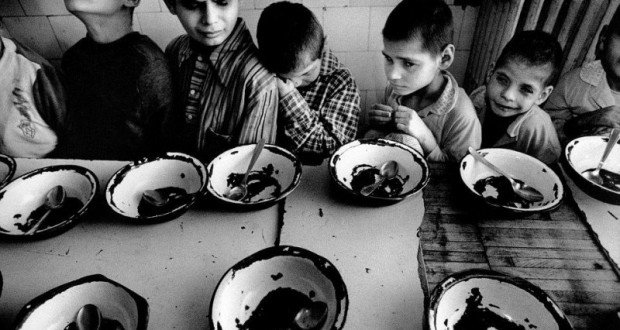
The importance of these cases is neatly outlined by Dr. Bente Mikkelsen, WHO/Europe’s Director of the Division of Noncommunicable Diseases and Promoting Health through the Life-course. “Child trauma has a terrible cost, not only to the children and the adults they become, whose lives it wrecks, but to every country’s well-being and economy.” The Doctor goes on to present a possible outlook on the situation: “With political will, we can all tackle this. Every sector and part of the community can make a difference in making society safer for children.” The important thing to note here is that “we need to speed up.”
There is not nearly enough being done to improve the situation in nations such as Romania where political corruption and dishonesty remains as endemic as ever. Programs such as the INSPIRE package provided by WHO/Europe provide strategies to promote the “implementation and enforcement of laws; norms and values; safe environments; parent and caregiver support; income and economic strengthening; response and support services; and education and life skills.” These are exactly the areas of our modern-day society that we should focus on.
2020 has been swept by a rise in youth activism and incentives to better the world around them. Change.org has multiple on-going child abuse and murder preventive petitions active. One of these, started by Governor Andrew M. Cuomo via a “Stop Abuse Campaign” has been signed by 7,281 people. Sadly, these numbers are not enough to raise awareness between policy makers who, whether we like it or not, are the ones that can implement long-term effective change.
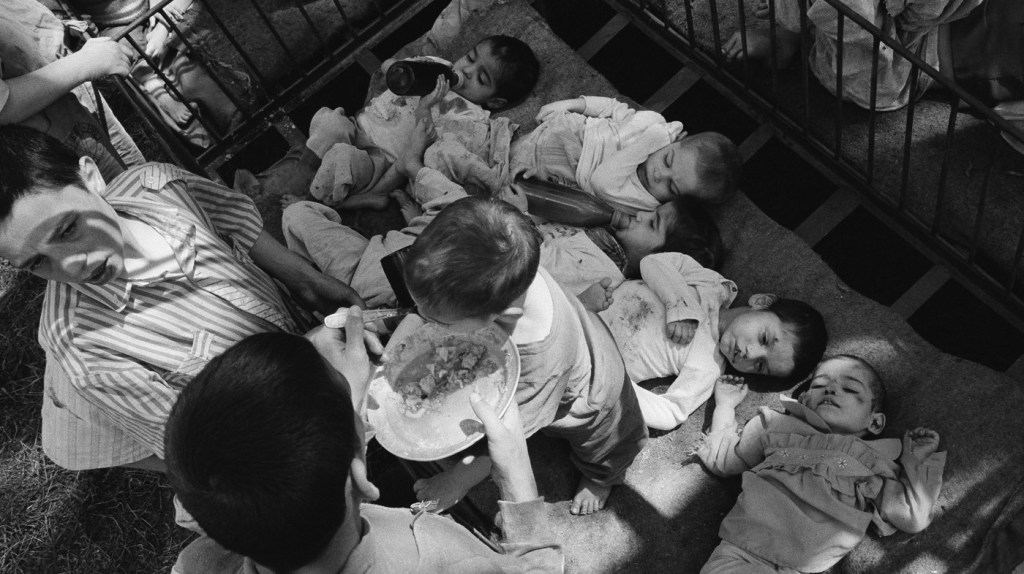
Regrettably, Romania has a history of child abuse – the worst of all being under Ceausescu’s communist regime. As the Guardian states “by 1989, when the dictator was killed, up to 20,000 [children] had died in Romania’s children’s homes. Now [30 years later] criminal cases may finally be brought.” Pictures of “emaciated children clothed in rags, looking into the camera with desperate eyes amid the squalid decay of the country’s orphanages” toured the world in the aftermath of the 1989 communist 1989 revolution. Horrifyingly, in the three decades since his fall, “only a handful of people have faced legal punishment for their roles in Ceausescu’s repressive regime.” There have been no criminal cases over the 10,000’s of children mistreated by the regime’s inhumane “network of juvenile internment institutions”.
30 years later, the people responsible have still not been held accountable for their actions. Ana Blandiana, a renowned Romania poet, “the point is not to put 90-year-olds in prison, the point is to speak the truth about the period to close this chapter.”
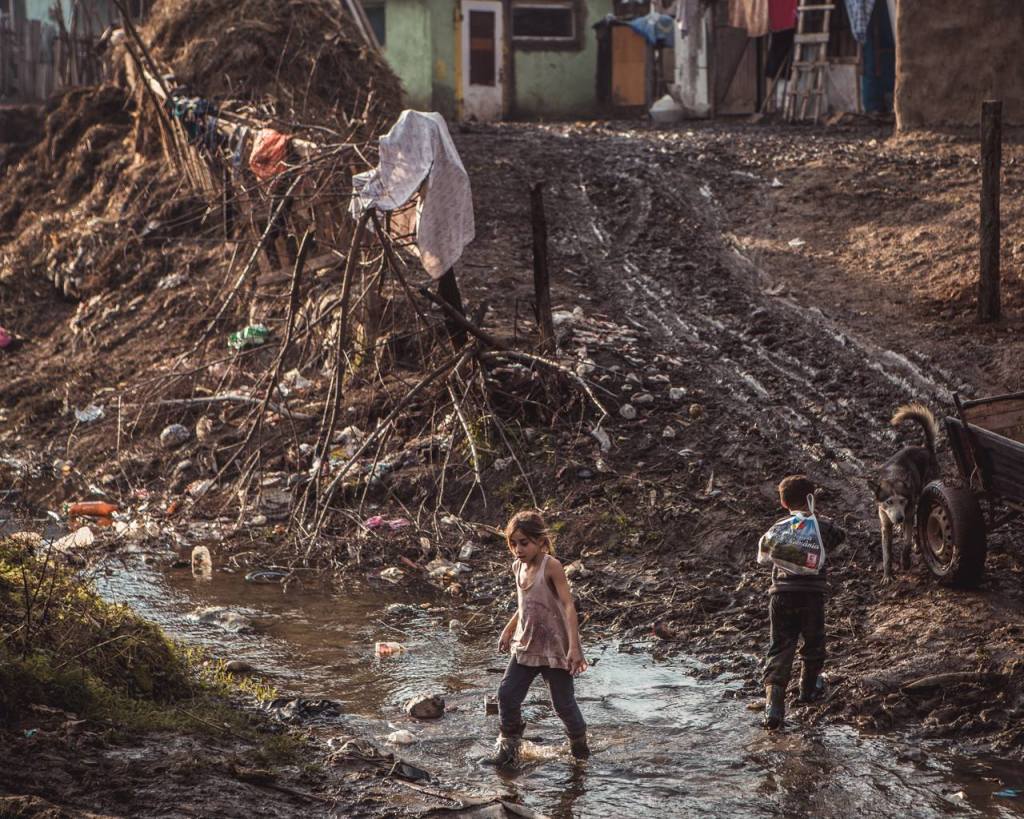
Romania needs governmental transparency, effective policy making, and an educational system that encourages its youth to stay in school. Unfortunately, it is not the only one.
Bibliography:
https://www.statista.com/statistics/1103473/child-abuse-cases-romania/
https://www.researchgate.net/publication/242699949_CHILD_ABUSE_AND_NEGLECT_IN_ROMANIAN_FAMILIES
https://en.wikipedia.org/wiki/Romania#Economy
https://tradingeconomics.com/romania/rural-population-percent-of-total-population-wb-data.html
https://www.change.org/p/protect-children-from-abuse-and-neglect
 hARTS magazine