by Violeta Mihai
“Great moments in science: Einstein discovers that time is actually money”- Gary Larson
By the time Einstein published his paper on special relativity in 1905, planes weren’t even invented yet, so although his findings were considered insightful and paradigm-shifting, they didn’t seem to be so useful for the everyday man at the time. But that thing changed soon.
Now the theory’s predictions are everywhere: the Global Positioning System (GPS) would lose 10 km of its accuracy each day, we wouldn’t have had TVs and we wouldn’t have had access to the internet.
So, it makes sense that a percentage of a country’s budget should be spent on gaining new perspectives.
National pride
In 1939, the Nazis did not just start a war, they embarked on a journey of new discoveries, of intensive research and innovation. They didn’t just plan their next battle, they planned their resources too, building new factories, new aircrafts, new tanks and technology.
To achieve global domination the Reich needed to be ahead of the enemy, to surprise him with new and more lethal weapons, to improve their capacities in every possible manner.
The Germans put to work their brightest minds in order to innovate and to win, creating the world’s first long-range guided ballistic missile- the V2, the Enigma, night vison goggles and so on. Even after that, during the Cold War, the competition between the Soviet Union and the United States led to the what is now known as the Space Race.
The first satellite, the first man in space, the first spacewalk, the first man on the moon- all these were reasons for both the American and the Soviet to be proud of his country and leaders. We can say that projects like Sputnik or Apollo were funded mostly out of pride and maybe fear.
Cheaper, better, safer
Despite the fact that a lot of the research money still goes to the army, the economics are also taken into account. Energy independence is a great deal for a country, as it doesn’t depend on the international context to supply itself and its citizens.
Each nuclear plant costs around 7 billion dollars and western countries count on it as, for example, in France, 70% of electricity comes from nuclear reactors. But there can be even more efficient and safer ways to produce energy.
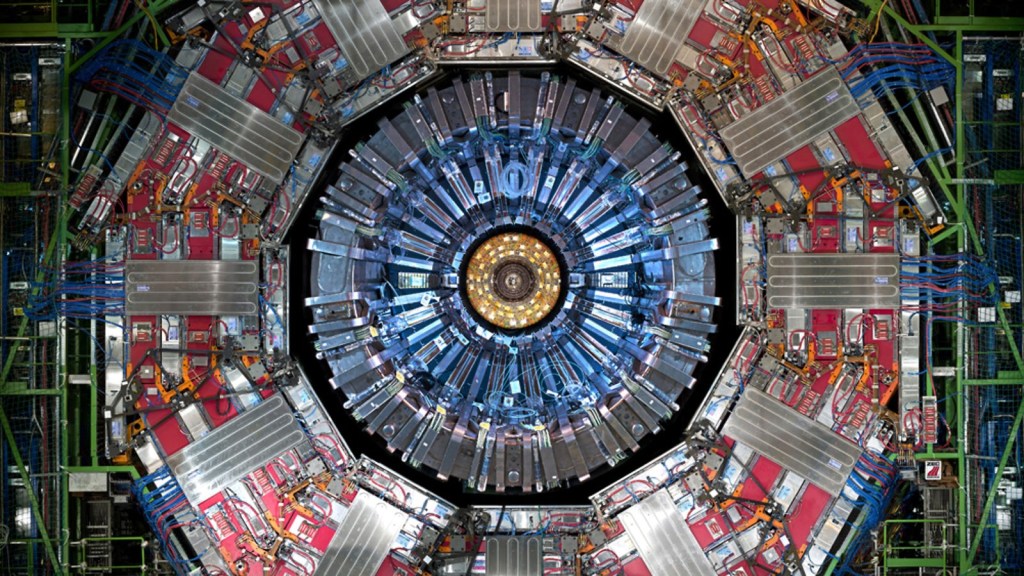
The quest for the first nuclear fusion reactor will cost 35 countries the astonishing amount of 65 billion dollars, even though ITER (International Thermonuclear Experimental Reactor) is conceived as just an experiment- just a starting point. Despite that, leaders are optimistic about it, claiming that “ITER is a promise of peace”. All of the sudden, the billions invested in the particle accelerators may finally pay off.
Indeed, science is the apanage of the wealthy, being the subject of the biggest investments ever made, but the history proves that there are lots of reasons why it’s worth it.
 hARTS magazine