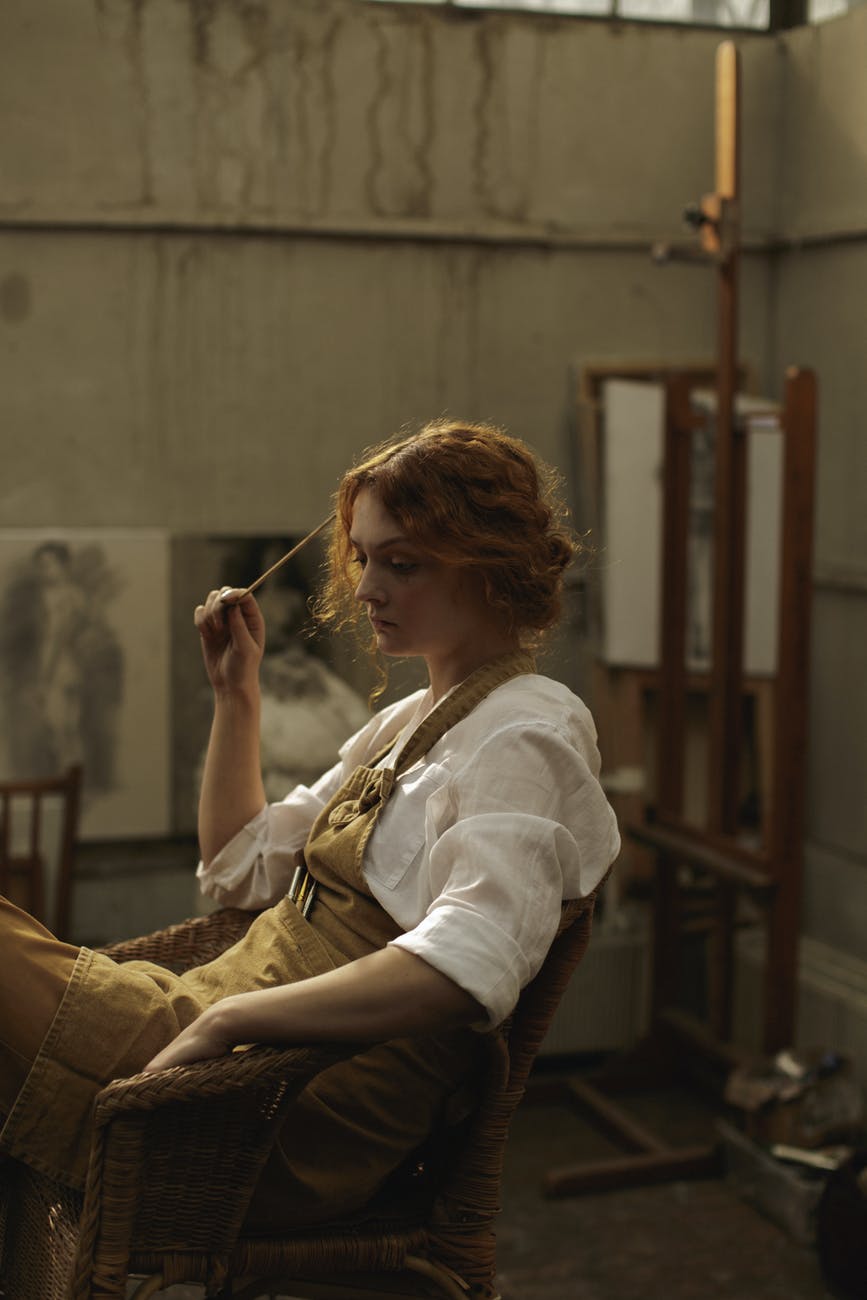
by Lexi Born
Visual art has been a foundational aspect of human life for hundreds of thousands of years. It predates the first civilizations, the first written languages, even the first settlements, and yet it is losing importance in today’s STEM-driven society. With so much emphasis on science and math, students, parents, and administrators alike ask themselves “Why study art?”

Art is one of the most meaningful ways we have to communicate and interact with the world. With it, we can impart thoughts, feelings, experiences, and perspectives where words fail–and they fail often. Words come in exactly two tones: black and white. They have a singular, explicit meaning, one that leaves no room for interpretation. Art, on the other hand, exists in vivid color, in shades of reds and greens, yellows and blues, pinks and purples, that opens each piece up to individual interpretation.

There’s no one correct definition, no singular meaning, just colors and lines and vague emotions. That vagueness forces the viewer to dig inside themselves, to sift through memories and emotions in order to find the meaning of the art. There is a process of interpreting and analyzing a piece that is simply not present in other areas of study, and this often leads to a deep connection between the viewer and the art.
Studying art connects students to the history of humanity. From cave paintings created with mineral oxides and hollow bones to massive stained glass windows in towering stone cathedrals to paint splatters on canvas, humans have used art to relate to the world around them. By following art movements and styles throughout history, we can learn what subjects were important to them, what they believed, what they revered, and what they hated. We can trace the advances of technology and the scientific breakthroughs of the era alongside developing religious beliefs.
We can even follow the beginnings of complex societies solely based on the progression of the art’s subject matter. For example, we can see the shift from hunters and gatherers to an agriculture-based society in the added emphasis of plants in paintings and in the architecture of dwellings. There is no subject that cannot be further explored through the lens of art, and most studies would be enriched by this different viewpoint.

For me, the answer is simple. We need to study art because it is what makes us human. This method of expression and communication through image and color is something unique to our species, and it would be such a shame to waste it. After all, what is life without a little color?
 hARTS magazine