
a political philosophy approach

As social human beings, the one idea that we can most easily relate to is belonging. Ever since our creation, we have joined together realizing that company is unreplaceable and possibly crucial for our very existence. Being a citizen is more than a title. It holistically and suitably fits the modern-day description of man. The subtleties of this title, however, originate from its resulting duties and moral attributes.
Being a citizen in the 21st century is different from what being a citizen in the 17th century was like which, in return, is different from what being a citizen in the 12th century implied. In the 1600s, arguably the most striking difference would have been the one between what would be expected of you if you were a man, in comparison to the expectations of being a woman. Today, the discrepancies between the two are the smallest they have ever been, despite also being the ones most loudly and ardently advocated for. In modern-day society, if there are considerable contrasts between what being a female citizen and what being a male citizen demands, the people will not rest, but will take a stand for “equality” and “fairness”; this being part of their duties as active citizens of society.

Many dictionaries, including MacMillan, define the concept of being a citizen as “someone who has the right to live permanently in a particular country and has the right to the legal and social benefits of that country as well as legal obligations towards it” [1]. It becomes curious, however, when one realizes that the Cambridge dictionary positions it slightly differently: “a person who is a member of a particular country and who has rights because of being born there or because of being given rights” [2]. Notice that the Cambridge definition lacks the mention of “legal obligations” which the MacMillan one clearly acknowledges.
Ironically, the clear distinct difference between the two, is also the main subject of discussion when contemplating the subtleties of what being a “citizen” actually means.
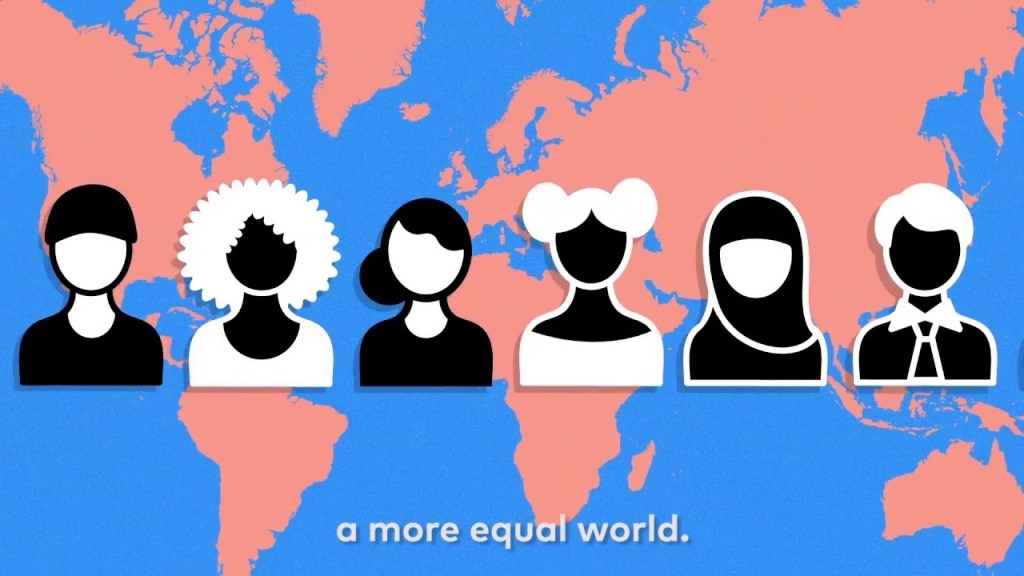
Arguably associated with modern moral and political theory and first presented in Plato’s “Crito” written in 399 B.C.E., Socrates’ Social Contract Theory remains a foundational philosophical approach of the so-called ‘contract’ between the members of a society.[3.1] By skillfully personifying the Laws of Athens, Socrates argued that, after a person has been able to analyze the ruling and conduct of the city they find themselves in and they decide to stay in that city, they are agreeing to abide by that city’s Laws and to accept its punishments.[3.2] A citizen is thus shaped to be a person that has given its moral and, at a minimum, subconscious consent to abide by the Laws of a certain society or community. Therefore, the “legal obligations” set aside by the Cambridge Dictionary, here become indispensable.
Hobbes approached this situation slightly differently in his 1651 “Leviathan”. He enabled himself to define his contemporary man and thus his contemporary citizen, by imagining the circumstances of a community of people that existed prior to the creation of society entitled the State of Nature.[4] By drawing parallels between the lack of established law and chaos, Hobbes ended up associating this State of Nature to a permanent state of war. Subsequently, after recognizing the Laws of Nature (arguably the same set of laws I have previously acknowledged as moral obligations) man is able to create a civil society in which to flourish. Hobbes demonstrates that society was therefore created in order to avoid the amplification of the self-interest-driven individuals and explores the idea that the innate human desire for order has been the fueling force behind the creation of society itself.

We can thus conclude that philosophers, more than two millenniums apart, have continuously identified citizenship with the moral obligations that people agree to abide to when becoming an official member of a society or community.
In his masterpiece “The Republic” – first written in 375 B.C. – Plato acknowledged that “individuals need to be educated into citizenship”.[5] The Athenian philosopher is not only indicating that, despite having possibly agreed to some sort of social contract to abide by civil obligations, individuals do not have a good understanding of the actual implications of being a citizen but also that it is society or the state’s duty to educate their citizens about those obligations and implications.
A lexical approach can here also be deemed indispensable. The word civil, despite meaning “relating to ordinary citizens and their concerns” also means “courteous and polite”.[6] The double-meaning of the word could have a direct correlation. Being a citizen implies respecting the moral and written laws of the respective nation or state; those moral laws indicating towards a generally respectful attitude.
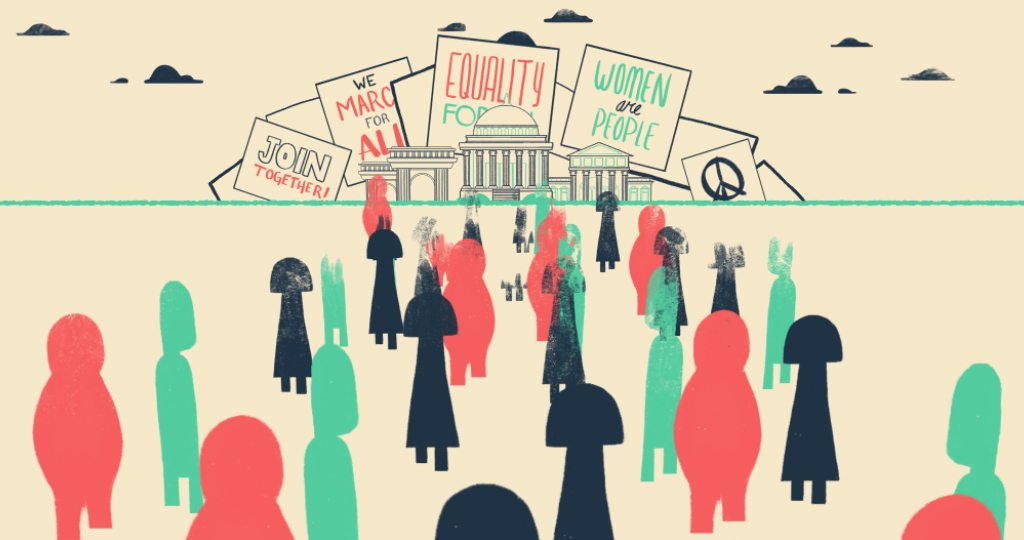
The literary correlation is potentially debatable, however the moral implications of the word “citizen” cannot. Leibniz acknowledged in his “Philosophical Writing”, first presented in the 1600s, that “the whole order of nature must eventually be transparent to reason”.[7] What this means, is that any alteration of the so-called moral obligations – be it via the Social Contract, the Laws of Nature or others – are, in fact, the product of human reasoning as to what a society should mainly be founded on (note the use of the word moral in “moral obligations”). In other words, our morals are those that indicate the way we conduct in society. These conceptual implications are subjective, of course, to the way each individual perceives the world around him and are subject to drastic change over time.
So far, solely the limitations and binding implications of citizenship have been explored. Perhaps the most relevant aspect of citizenship in our modern-day society remains its role in different forms of government. The most common form of government today is democracy: “the government of the people, by the people, for the people”, as Abraham Lincoln stated in his Gettysburg Address in late 1863. [8]
Even though the very definition of democracy has been manipulated in today’s society – with some of the harshest dictatorships utilizing this term to describe their rule (for example, The Democratic People’s Republic of Korea) – there remains significant differences between what is expected from citizens depending on the country’s form of ruling.

In an address recorded for the Republican Lincoln Days dinner in 1954, Dwight D. Eisenhower stated that “Politics ought to be the part-time profession of every citizen who would protect the rights and privileges of free people.”[11] The concept of citizenship in a democracy, besides referring to the legal membership to that country, also refers to the activity of the individual in the respective society. In an ideal democracy, the state is said to believe that as citizens become more involved in the decisions that ultimately impact them, the state becomes fairer, undergoes improvement and people’s life generally increases in quality. [9] Similarly to the citizen-state relationship explored in Plato’s theory that the state should educate its population on citizenship, Eisenhower presents the thought-experiment of a state whose citizens actively take part in its decision-making processes. In both cases, the role of the citizen is indispensable and perhaps even amplified when compared to its contemporary significance.
The implications of citizenship also differ depending on circumstances and location. For example, in South Africa a good citizenship could be defined as someone that actively fights racism whereas in older democracies, volunteering could be the defining factor. This is where questions such as “What values does citizenship demand?” and “What responsibilities do citizens have?” originate.
Inquiries about citizenship are therefore directly altered and shaped by the role of the citizen in our society. Modern-day perceptions of citizenship revolve around equality and universality, many of which find their roots in the Universal Declaration of Human Rights created by the members of the United Nations in 1948.[10] The newly derived concept of being a “global citizen” arises from the desire to become a part of the emerging world community.

Being a citizen in today’s society has grown beyond the focalized perceptions of philosophers such as Plato or Socrates. Despite containing relatively, the same moral implications, a greater importance is now placed on the change that active citizens can achieve. If citizenship and moral laws aided our resurface from the State of Nature, contemporary citizenship facilitates our creation of an inter-connecting, cooperative world and our never-ending battle against discrimination.
The lack of definitive guidelines for the moral obligations a citizen must abide to has led to their continuous alteration, this being dependent on the creation of new norms and standards in contemporary societies. Be it via Leibniz’s ‘reason’, Eisenhower’s ‘profession’ or Plato’s ‘education’, humanity is in continuous need of solidly defined regulations to ease our creation of a global community and prevent the fabrication of immoral collateral damage.
By Laura Ionescu
Editor-in-Chief at hARTS

 hARTS magazine