- A Raisin in the Sun portrays a few weeks in the life of the Youngers, an African-American family living on the South Side of Chicago in the 1950s.

In a Raisin in the Sun, pride is the driving force behind all of the main characters, defining the way they engage with their surrounding and the decisions that they are presented with. By carefully portraying how much each of these characters allow themselves to be influenced by pride, Lorraine Hansberry shapes the plot in such a manner that the audience is enabled to see the consequences of enabling pride to interfere in quotidian decision-making.
By presenting pride as a combination of both a positive force yet also a destructive one, Hansberry allows her audience to better understand the complexity of life-altering decisions we all must undergo at some point in our lives. She demonstrates that when pride is excessively employed and when we allow it to interfere too much in our day to day lives, the results can have a much larger effect than we could’ve initially imagined.
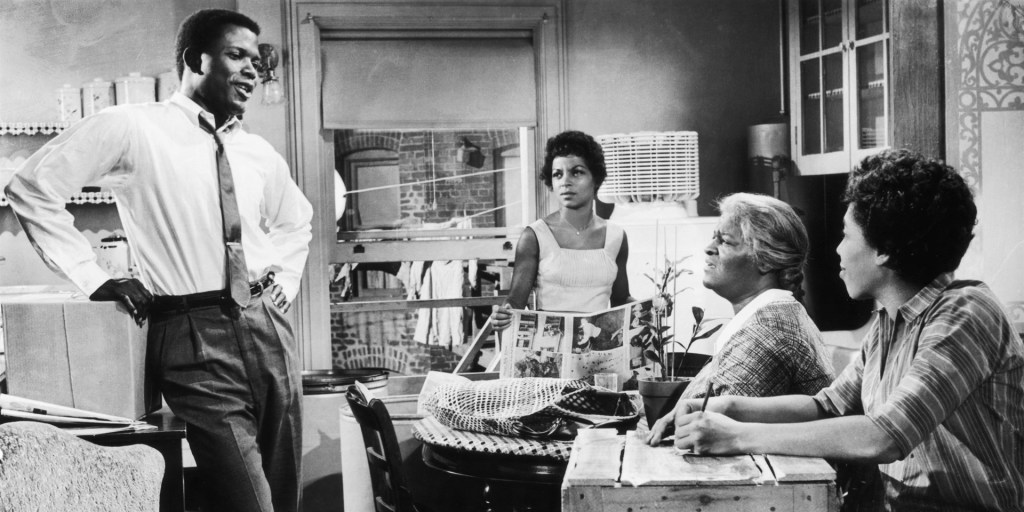
Walter’s character is hereby utilized in order to depict just that. When faced with the life-altering decision between accepting the white communities’ bribe and not moving into the white neighborhood versus agreeing to stand up for himself and his family and moving in nevertheless, it is his pride that prevents him from giving in to the ‘easier’ choice. The internal power that Walter has needed to build up within himself in order to stand up against Lindner with a defying “we don’t want your money” was directly fueled by pride. In those crucial moments of the play, Hansberry has decided to prove to her audience that people can build a strong character for themselves if they learn how to channel their pride. Because Hansberry has decided to do this only after Walter has previously declared that he will give in and take the money instead, she has managed to alter the situation so that the audience is faced with both ends of the spectrum.
By being able to directly compare Walter’s submission and weakness of the previous act when she declared that he “will go down on (his) two black knees” and accept the money, to the way he “looks the man absolutely in the eyes” and states that his family has decided to refuse the money, the audience is presented with a much clearer perception of the positive force that pride has metamorphosed itself into the play. Hansberry, through Walter’s character, directly shows that there can never be too much pride and that Walter’s internal strength and morality compared with the will to stand up for himself and his black family in the 1950s has here been completely successful.
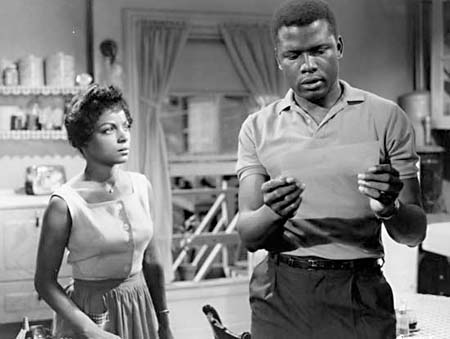
The same idea is threaded throughout the film adaptation of the play that was also directed by Lorraine Hansberry herself. The playwright made sure to also explore the same idea in the movie by placing the camera from below as Walter was delivering his monologue to Lindner. The way that the camera carefully shifts from eye level to an angle from below at the point where Walter refuses the money, directly goes to show how Walter’s pride seeps through his character in those moments. Because of the angle change, the audience can clearly see that as Walter becomes more confident and allows the positive force of pride to overcome his decision-making process, he is becoming stronger and superior to Lindner and the rest of the family, hence portraying pride as the ultimate good-driving force.
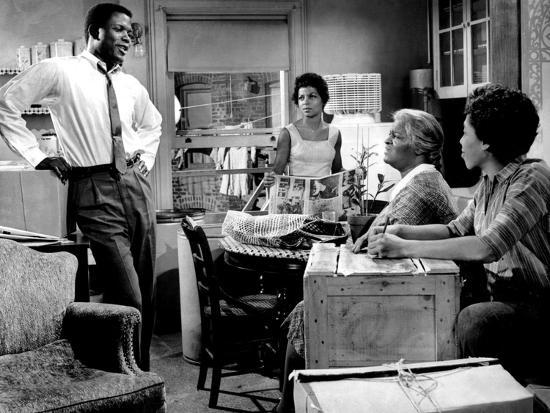
Hansberry also portrays pride as the main under-lining force which makes Mama so determined to move into the white neighborhood. The strength and character will with which Hansberry shapes Mama’s personality is clearly shown by her constant internal motivation to place her plant in the sunlight; always hoping that it will have the most favorable circumstances in which to bloom. Hansberry very skillfully positions this throughout her play. Because the plant symbolizes Mama’s hopes and dreams for the future of the Younger family, Hansberry subtly introduces pride into Mama’s action of placing it in the sun: her attempt at making her hopes and dreams achievable. Without pride and the constant belief that she can defy black stereotypes and ultimately move into the white neighborhood no matter what the African-American community was seen as at the time (isolated, segregated people), Mama would not have been able to “go out and buy (the Youngers) a house”, and not any house. A “nice house” with “three bedrooms” and “a yard with a little patch of dirt for flowers”.
The way Mama sees her achievement – the fact that she has been able to buy such a nice house years after living in the worst of living conditions – directly proves the way her character has engaged with pride. Hansberry here shows that pride is perhaps one force that has the power to drive people to achieve what they would otherwise think unreachable. Hansberry positions pride as the one personality trait that was able to drive the Younger out of the misery and into a prosperous-looking future. However, the playwright also leaves us on the edge here. Because we do not know what happens when the Youngers do actually move into the neighborhood, we are left to wonder whether Mama’s pride-driven decision of defying stereotypes was indeed the wisest. Lorraine Hansberry’s own past mirrors this.
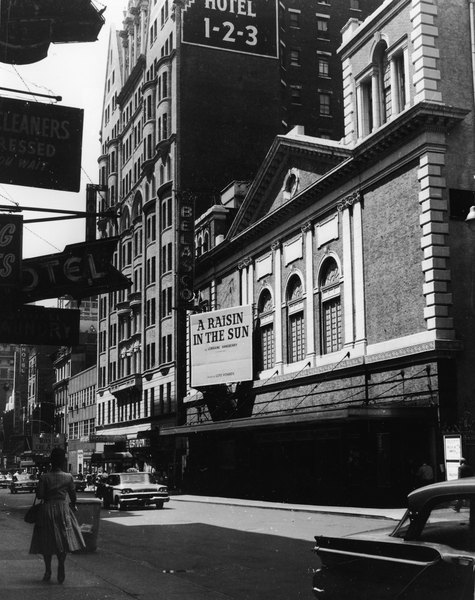
When her own parents decided to move into a white neighborhood, the transition was not smooth. Hansberry herself was almost injured by a brick that was thrown into their living room through the main window. Having these types of circumstances already happening and knowing that these types of consequences could result from Mama’s decision makes the audience question the positivity of pride in these circumstances and starts treading upon how it may become dangerously excessive. Perhaps the Younger family have just signed themselves into a constant racist and stereotyped environment. Perhaps them moving into the white neighborhood is not actually the best decision that the Younger family could have made. However, Hansberry’s skill at leaving these possibilities out in the open and not providing a secured ‘happy-ending’ goes to prove even more the uncertainty of life and that pride, in fact, drove the Youngers to make certain decisions, the consequences of which they will need to face and accept in the future.
The play also provides a clear instance where pride is obviously dangerously excessive. By providing this alternate view upon the idea of pride and its impact on the Youngers, Hansberry offers to her audience a possible alternative and enables the viewers to understand that there is always the flip-side to a coin, or a different version of the same story. She wants her viewers to perceive the way her play reflects reality and the way that pride can have more than one effect on people. The way Lindner is presented as a pride and stereotype-driven individual illustrates this.
Hansberry provides Lindner’s character in the play in order for us to see the opposite end of the spectrum when it comes to the impact that pride can have on individuals. He represents the white community that the Younger wish to move into and we can clearly understand that he believes in white superiority and the fact that black people do not belong in their neighborhood and will only bring “unwanted trouble”. His pride rests in his belief that the African-American family should not move into their ‘pristine’ white community. He sees this change as a direct attack upon his racist views. Hansberry manages to present, therefore, pride, in a very negative light showing how it can become dangerous to a peaceful society. She demonstrates that pride can lead people to racist, segregated and discriminatory actions, pushing individuals to have morally wrong beliefs. Introducing such a concept in a play in 1959 was an incredibly courageous move on Hansberry’s part and was most probably one of the reasons why the play became so successful.
Hansberry did not only portray the way black people were driven by pride but she also illustrated the flip side. By doing this she, again, demonstrated that there are risks that result from every single decision we make. She showed her audience that pride ca push people to reach the unthinkable and make dreams come true, however, she also portrayed the way pride can be disruptive of a normal society and can lead to dangerous consequences.
Perhaps the initial title of the play, which made reference to a “glass staircase” would be more adequate. The fragility of every situation presented in the play as well as the care with which the characters tread throughout the plot in order to avoid a total catastrophe would hereby be precise. Pride is here presented as a positive force which can aid all characters to achieve their dreams yet at the same time disrupt others.
by Laura Ionescu
Editor-in-Chief of hARTS magazine

 hARTS magazine