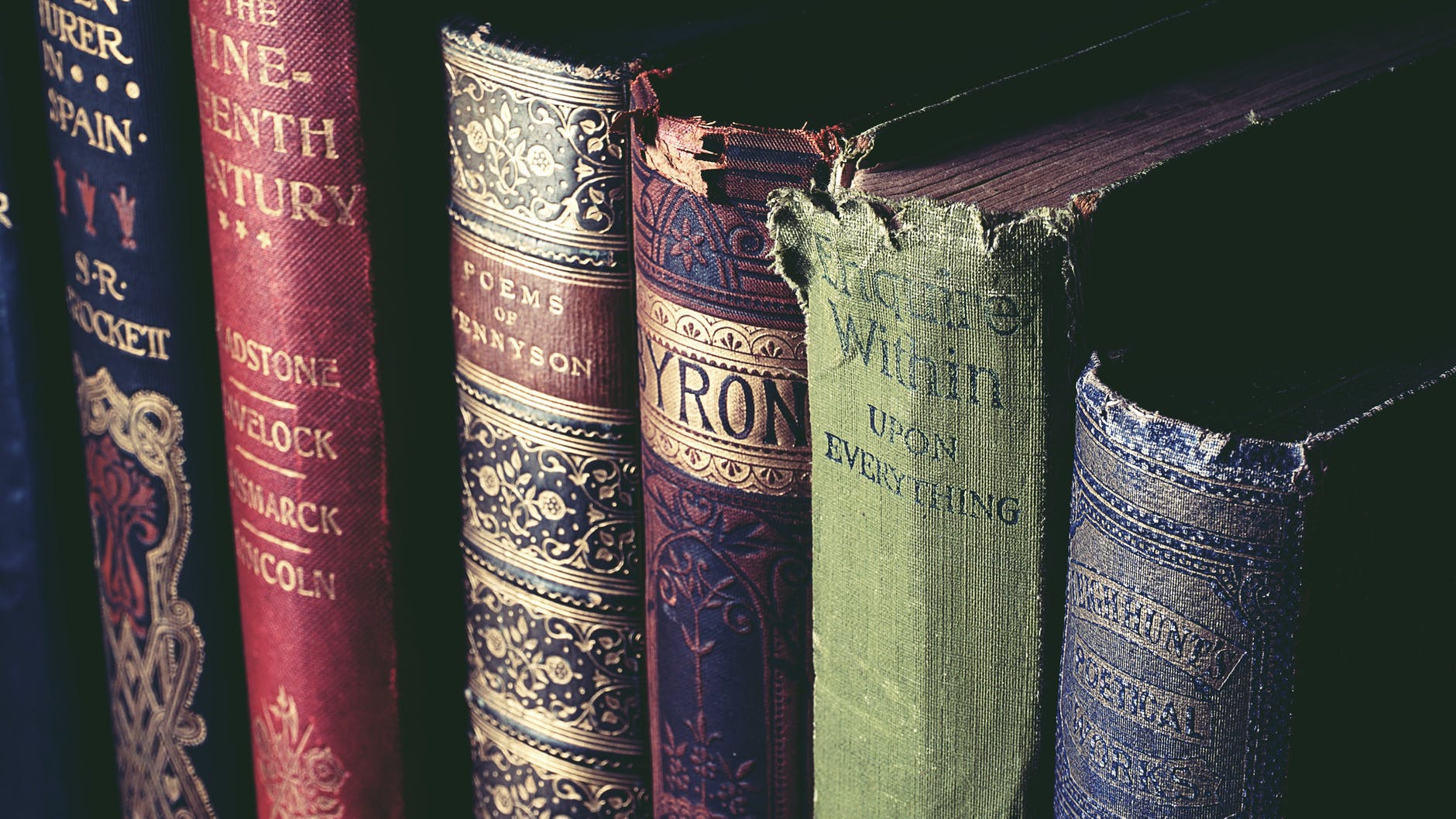
Poetry has the power to encapsulate our souls on paper. They have the strength and wit to configure our deepest thoughts and express them in such ways that others can then relate and enjoy them too. The hands behind the most impactful poems are complex and unique. The talent with which they created their works of art should be appreciated and shared exponentially, as only this way we can truly discover their true meaning and come together as human beings.
Here are some pieces that made me think and explore what I used to take for granted.
Poetry is for everyone, you just need to discover what type you like.
Share in the comments your thoughts and types of poems you would like to see in future editions of this new article series.
Enjoy!
An Old Man’s Winter Night by Robert Frost
All out-of-doors looked darkly in at him
Through the thin frost, almost in separate stars,
That gathers on the pane in empty rooms.
What kept his eyes from giving back the gaze
Was the lamp tilted near them in his hand.
What kept him from remembering what it was
That brought him to that creaking room was age.
He stood with barrels round him—at a loss.
And having scared the cellar under him
In clomping there, he scared it once again
In clomping off—and scared the outer night,
Which has its sounds, familiar, like the roar
Of trees and crack of branches, common things,
But nothing so like beating on a box.
A light he was to no one but himself
Where now he sat, concerned with he knew what,
A quiet light, and then not even that.
He consigned to the moon—such as she was,
So late-arising—to the broken moon
As better than the sun in any case
For such a charge, his snow upon the roof,
His icicles along the wall to keep;
And slept. The log that shifted with a jolt
Once in the stove, disturbed him and he shifted,
And eased his heavy breathing, but still slept.
One aged man—one man—can’t keep a house,
A farm, a countryside, or if he can,
It’s thus he does it of a winter night.
The World by Jennifer Chang
One winter I lived north, alone
and effortless, dreaming myself
into the past. Perhaps, I thought,
words could replenish privacy.
Outside, a red bicycle froze
into form, made the world falser
in its white austerity. So much
happens after harvest: the moon
performing novelty: slaughter,
snow. One hour the same
as the next, I held my hands
or held the snow. I was like sculpture,
forgetting or, perhaps, remembering
everything. Red wings in the snow,
red thoughts ablaze in the war
I was having with myself again.
Everything I hate about the world
I hate about myself, even now
writing as if this were a law
of nature. Say there were deer
fleet in the snow, walking out
the cold, and more gingkoes
bare in the beggar’s grove. Say
I was not the only one who saw
or heard the trees, their diffidence
greater than my noise. Perhaps
the future is a tiny flame
I’ll nick from a candle. First, I’m burning.
Then, numb. Why must every winter
grow colder, and more sure?
Lines: The cold earth slept below By Percy Bysshe Shelley
The cold earth slept below;
Above the cold sky shone;
And all around,
With a chilling sound,
From caves of ice and fields of snow
The breath of night like death did flow
Beneath the sinking moon.
The wintry hedge was black;
The green grass was not seen;
The birds did rest
On the bare thorn’s breast,
Whose roots, beside the pathway track,
Had bound their folds o’er many a crack
Which the frost had made between.
Thine eyes glow’d in the glare
Of the moon’s dying light;
As a fen-fire’s beam
On a sluggish stream
Gleams dimly—so the moon shone there,
And it yellow’d the strings of thy tangled hair,
That shook in the wind of night.
The moon made thy lips pale, beloved;
The wind made thy bosom chill;
The night did shed
On thy dear head
Its frozen dew, and thou didst lie
Where the bitter breath of the naked sky
Might visit thee at will.
Laura Ionescu
Editor-in-Chief of hARTS magazine
follow us on social media – @hARTSmagazine

 hARTS magazine